

Shelby County already has a data center in Simpsonville, and companies have announced plans for more computing capacity there. But an existing building, an expansion announcement and permission to develop are different things. So are the rules of Shelbyville, Simpsonville and the county government.
Shelbyville’s November 5 vote adds a new development: the City Council approved a first reading to extend its pause on data-center applications through June 30, 2027. The extension has not been finally adopted and returns November 19, according to Mayor Troy Ethington’s newly posted meeting summary.
Here is what the records establish, and what remains open.
What Is Already in Simpsonville?
Aphorio Carter announced in February 2025 that it had bought two enterprise data centers, one in Simpsonville and one in Louisville, for about $35 million combined. That figure is a past purchase price for both properties, not a budget for a new Shelby County development.
The company described each building as 102,500 square feet, with capacity to support one megawatt of critical IT load. That is a description of computing capacity, not a measurement of current electricity use. Kentucky’s business directory historically identifies the Eaton data center at 70 Kingbrook Parkway in Simpsonville.
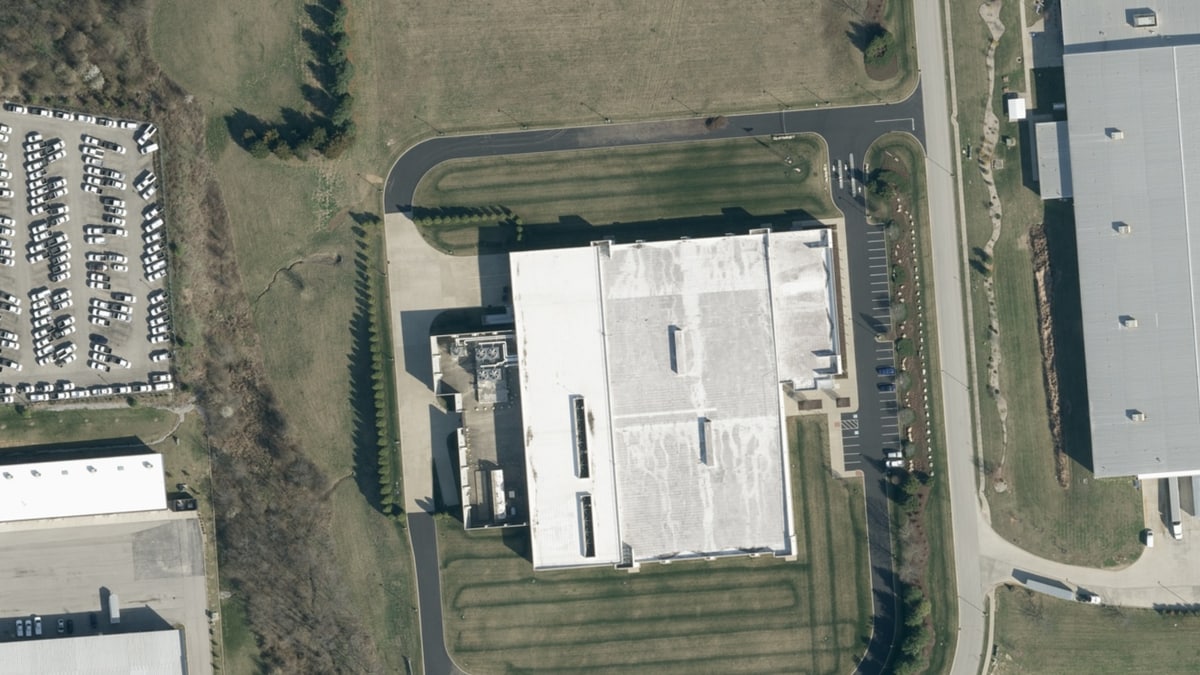
In May 2026, 365 Data Centers and Aphorio Carter named Simpsonville and Aurora, Colorado, as their first two locations for pursuing letters of intent in a roughly 200-megawatt, multi-market pipeline. The 200 megawatts covers the broader plan, not Simpsonville alone. The announcement gave no separate local investment figure and said space and power remained subject to final contracts and internal approvals.
What Does the 17-Megawatt Figure Mean?
LG&E and KU’s transmission-service request list, updated November 6, marks a 17-megawatt request for Aphorio Carter in Simpsonville as confirmed. A transmission request does not establish that the full capacity is operating or that local construction approvals have been issued.
Great Plains Communications’ November 2025 fiber announcement described plans for the Simpsonville facility to expand to as much as 17 megawatts by the fourth quarter of 2026. That quarter has arrived, but the announcement remains a target. The records reviewed do not establish that the expansion has been completed or energized.
Why Do Three Governments Matter?
The county Fiscal Court adopted a data-center moratorium ordinance July 21. Simpsonville’s City Commission unanimously approved its own resolution August 18. Shelbyville has its own pause on accepting, processing, reviewing or approving applications for data centers and similar large-scale information-technology facilities within the city.
Ethington’s summary says Shelbyville’s existing pause expires December 31, 2026. The proposed June 2027 extension needs further council action. Its November 19 second reading is scheduled for 5:30 p.m. at City Hall, 315 Washington Street. The summary supplies no first-reading vote tally or named votes.
Simpsonville also adopted zoning amendments October 20. Its published minutes do not spell out their provisions. Ethington described Simpsonville’s approach as including conditional-use requirements and a prohibition above 20 megawatts, but the full current text was not available in the records reviewed. Those provisions and any exceptions should not be assumed to govern a particular proposal from that description alone.
The three governments share the Triple S Planning Commission, but Kentucky law permits different zoning rules within a joint planning unit. A Shelbyville vote does not set Simpsonville’s rules or those for unincorporated Shelby County. A project’s parcel and applicable jurisdiction matter. If rezoning is required, state law generally calls for a planning-commission public hearing and recommendation followed by action by the relevant governing body.
What About a Temporary Pause?
Kentucky law allows interim land-use regulations in specified circumstances. In Tahoe-Sierra Preservation Council v. Tahoe Regional Planning Agency, the U.S. Supreme Court held that a temporary planning moratorium does not automatically require compensation as a taking of property. That ruling does not decide whether any particular Shelby-area measure is valid or how it applies to an existing application.
What Still Needs Answering?
The next useful records are the actual project application and site plan, applicable ordinance text, utility-service commitments and any incentive approval. Kentucky’s qualified data-center incentive law requires public disclosure of the company, location and investment for projects receiving preliminary approval.
For residents, the important unanswered questions are specific: the expansion’s footprint and timetable, water demand and cooling system, noise controls, responsibility for utility upgrades, permanent jobs and tax benefits. The announcements and transmission entry reviewed do not settle those questions. Shelbyville’s next vote can clarify its own pause; it cannot by itself answer them for Simpsonville.